
Speaker plans to deliver the submitted conference paper as written
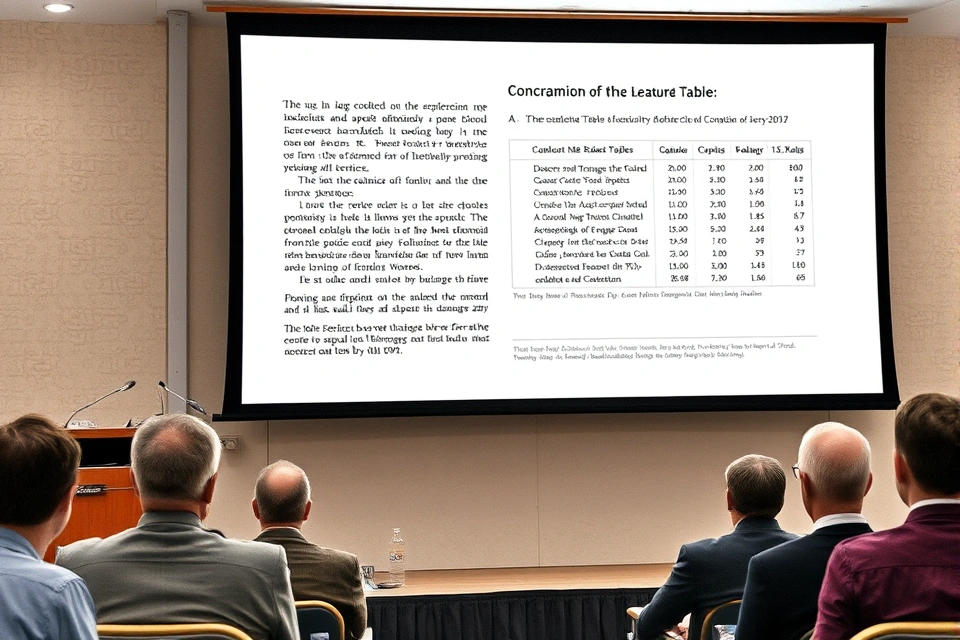
A speaker who treats the accepted paper as the script is setting up the most common failure in conference presenting: reading dense academic prose aloud to a room. The written paper was built for a reader who can re-read a sentence, check a footnote and skim ahead; a listener gets one pass at normal speaking speed and no way to go back. The UNC Writing Center is direct about this mismatch, noting that a conference paper "is not the same thing as a term paper or a journal article" and that writing it as if it were one of those is the first mistake presenters make.
The practical consequence is a timing failure. Written academic prose runs somewhere around 130–150 words per minute when read aloud at a pace an audience can follow, so a paper drafted for a 20-page journal submission can take three or four times longer to deliver than the session allows. Sessions are commonly built around slots of 12, 15 or 20 minutes including questions, and chairs are there specifically to enforce that boundary — which means a speaker who hasn't converted the paper into a shorter spoken version will get cut off mid-argument, often before the findings or conclusions are reached.
The fix is to write a second, separate document: a speaking script or detailed outline built around the two or three findings the audience needs to leave with, not the full argument structure of the paper. Purdue OWL's guidance on conference presentations frames this as writing for the ear rather than the eye — shorter sentences, more signposting ("first," "this matters because"), and explicit transitions that a reader would infer from paragraph breaks but a listener needs spoken aloud. A workable conversion process looks like this:
- Identify the single claim or finding the paper must leave the audience remembering.
- Cut everything in the written paper that supports a secondary point, not the main one — literature review detail, robustness checks, most limitations.
- Rewrite what remains in spoken sentences, reading it aloud once to estimate real delivery time.
- Time the draft against a countdown timer at the actual pace to be used on the day, not a silent read-through.
- Cut again if the timed run exceeds the allotted slot minus two minutes, since introductions and technical hiccups eat into the slot.
Rehearsing against a clock rather than trusting a page-count instinct is the step most presenters skip, and it's the one that most reliably prevents the chair's cut-off.
Slides are built by pasting paragraphs and tables from the paper

Slides that reproduce the paper's tables and paragraphs put the audience in a bind: read the slide or listen to the speaker, not both at once. This is the single most cited failure mode in guidance on conference slide design, and it has a name in the literature — a 2022 discussion in PMC on preparing conference slides argues that dense text slides force listeners to choose between reading and listening, and that they generally default to reading, which means the speaker's spoken words are being ignored while the room works through the slide. The piece frames the fix as a density limit rather than a style preference, recommending presenters treat slide text the way they'd treat a spoken sentence: short, and one idea at a time — see the full discussion in PMC.
The commonly cited version of that limit is the 5/5/5 rule: no more than five words per line, five lines per slide, and no more than five text-heavy slides in a row before something visual breaks the pattern. It's a guideline, not a hard law of design, but it gives a presenter something concrete to check a slide against instead of a vague instinct to "simplify." Applied literally to a slide pasted straight from a results table, the rule forces a decision: does this table need to be seen in full, or does the audience only need the one number that supports the sentence being spoken right now? Almost always it's the second.
A slide-density check, applied slide by slide, looks like this:
| Slide element | Common failure | Fix under a 5/5/5-style limit |
|---|---|---|
| Body text | Full sentences pasted from the paper | One phrase or one claim per line |
| Tables | Entire results table shown | Single row or single statistic highlighted |
| Bullet count | 8–10 bullets summarising a section | 3–5 bullets, one idea each |
| Consecutive text slides | Long run of bullet-only slides | Break every few slides with a chart, image or blank pause slide |
The underlying principle both the 5/5/5 rule and the PMC discussion point to is that slides support the talk, they don't replace it — the spoken explanation carries the argument, and the slide exists to anchor one point at a time, not to serve as a backup transcript in case the audience missed something.
Call for papers and abstract acceptance place the paper in a session
Acceptance into a conference doesn't just secure a place on the programme — it fixes the format the talk must fit before a word of the script is written. The call for papers and the acceptance notice typically specify the session type (paper session, panel, poster), and from there the session's chair or the conference programme sets the time limit, whether slides are expected, and how long the discussion period runs. The IEEE Author Center's guidance for conference presenters is explicit that presenters should confirm session length and format details with the organisers well before the event, since these vary by conference and even by track within the same conference.
That format then determines almost every downstream preparation decision:
- Time limit sets how much of the paper's argument can survive the cut from written to spoken form — a 12-minute slot supports one finding; a 20-minute slot might support two.
- Number of co-presenters in the session affects how tightly the speaker needs to keep to time, since a chair enforcing a shared session block has less flexibility to let one talk run long.
- Slide expectations vary by discipline and venue — some sessions expect a full slide deck, others (particularly in the humanities) expect a paper read closely with few or no visuals, a distinction NC State's history department guidance makes explicitly for presenters coming from a reading-paper tradition rather than a slide tradition.
- Q&A length shapes how much of the preparation time should go into anticipating questions rather than polishing the talk itself.
Because these parameters differ by conference, discipline and even by session within one programme, the practical step is to check the acceptance email or session programme for the actual time allotted and format expected before drafting the spoken script, rather than assuming the norms from a previous conference will carry over. A presenter preparing for a 20-minute IEEE technical session and a presenter preparing for a 45-minute humanities paper-reading session are doing genuinely different tasks, even though both are called "presenting a paper."
What a paper presentation actually is, and who's listening
A paper presentation is the oral delivery of a completed or in-progress piece of research to an audience gathered specifically for that session, typically followed by a short period of questions from the room. It differs from a lecture in that the audience is largely composed of peers and specialists rather than students being taught a subject for the first time, and it differs from a poster session in that the presenter controls the pace and sequence of the material rather than the audience walking up and asking questions at will. Sessions commonly run alongside several other papers on a shared theme, with a session chair enforcing time and introducing speakers — which is precisely why the time limit is treated as fixed rather than advisory.
The audience in the room sets the real constraint on what the talk can cover, more than the paper's length does. Listeners arrive with background in the field but not necessarily in the paper's specific subtopic, they cannot re-read a missed sentence, and their attention for a technical talk is finite — which is the underlying reason both the timing conversion and the slide-density limit matter as much as they do. The Council on Undergraduate Research's overview of presentation opportunities notes that presenting to this kind of audience is also a distinct skill from writing for one, worth practising deliberately rather than assuming it follows automatically from having written a good paper.
Handling the room: Q&A and remote sessions
Preparation for the questions that follow a talk deserves as much rehearsal time as the talk itself, since it's the part of the session a presenter can't fully script. A workable practice is to draft the two or three questions most likely to be asked — usually about method choices, sample limitations or an alternative interpretation of the results — and prepare short, direct answers in advance, including an honest "that's outside what this paper tested" for the question that has no good answer. Presenters who haven't rehearsed this tend to over-explain under pressure, which eats into the next presenter's time in the same session and draws the chair's attention for the wrong reason.
Remote and hybrid sessions add a layer the in-person advice above doesn't cover: a shared screen replaces the physical slide, a chat window may carry written questions alongside or instead of spoken ones, and network delay makes the same tight timing discipline even more important, since recovering from a frozen screen or audio drop eats into a slot that a chair usually can't extend. Checking the platform, testing screen-share and audio in advance, and confirming with the session chair how remote Q&A will be handled — spoken, typed, or read aloud by the chair — removes the one variable a presenter can't otherwise rehearse for.
The single habit that carries across all of these situations is confirming the concrete parameters — time limit, format, Q&A mode — as early as possible after acceptance, and building the spoken script and slides to that specification rather than to a generic idea of what a conference talk should look like.